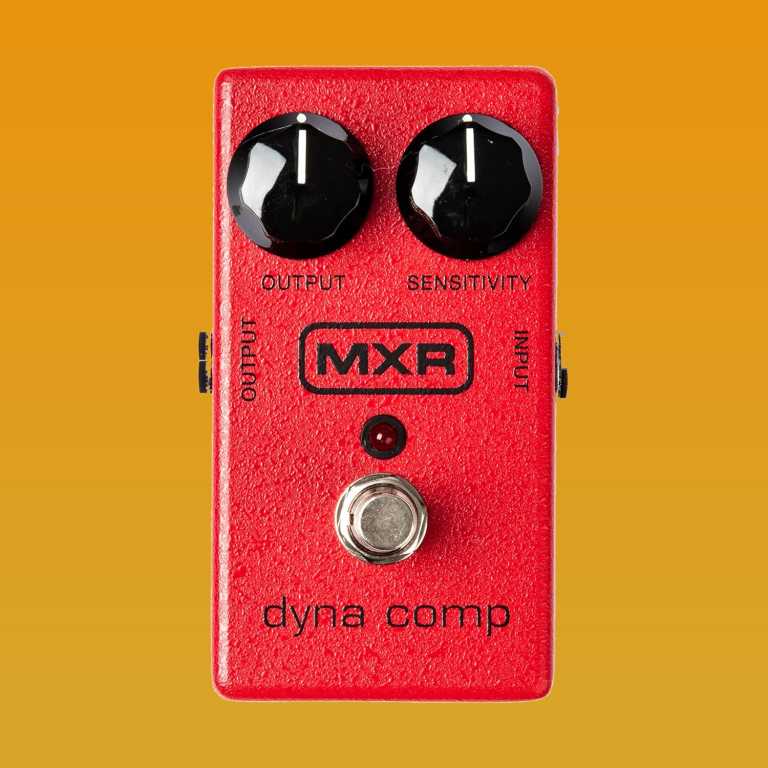
Rochester, New York, 1972. Keith Barr and Terry Sherwood wasn’t guitar players chasing no sound — they ran a stereo repair shop out a rented basement apartment, fixing whatever came through the door. What kept coming through was guitar pedals, and they was garbage. Cheap, unreliable. So Barr and Sherwood said forget it, we’ll build our own, better. That became MXR.
First thing they built was the Phase 90. Right behind it come the Dyna Comp — built round a chip called the CA3080 that had barely hit the market. Wasn’t nobody put a guitar compressor on it before. Caught on so hard in Nashville session work they just call it, flat out, “a Nashville standard.” David Gilmour ran one. John Frusciante ran one. Adrian Belew ran one. So did Nashville session legends Reggie Young and Grady Martin — the same cats who made it “a Nashville standard” to begin with. Near every compressor built after it — the Ross, the Keeley, the Way Huge — traces back to the circuit two repair guys built ‘cause nothing on the market was good enough.
On the Bench
Standard. That squashed sound, that squeeze — every guitar player wants that texture somewhere on they board, even the ones who don’t know it yet. Got a character all its own, and that’s exactly why it’s sitting on a million pedalboards and why we still love it.
- Model M102. Controls: Output, Sensitivity.
- Powered by a 9V battery, Dunlop’s ECB003 adapter, or DC Brick / Iso-Brick / Mini Iso-Brick supplies — not included.
- In production, $99.99.
How It Plays
That’s the whole idea behind compression, stripped down to the simplest terms it gets: make the quiet part louder, make the loud part quieter. Push that Sensitivity up and the Dyna Comp do exactly that — that percussive, quacky squash, full commitment, no blend knob to hide behind. Great biting into a rhythm part, great pushing a lead. Don’t do subtle, and it wasn’t never built to. This a one-trick pedal in the best way possible — it do exactly one thing, and it do it all the way, every single time you step on it. That’s the nature of the thing. That’s why we love it.
Bottom Line
This the first compressor we all ran. You don’t gotta admit it. The Dyna Comp grades a 24 out of 36 — solid Master segment, not the ceiling, and that’s fine by us. Wasn’t never built to be everything to everybody. Two knobs, one mood, full commitment — that’s the whole design philosophy, and it nailed it. Ain’t nothing else get to claim it did this first.
Everybody chasing a hundred settings forgot the whole point — sometimes one mood, done all the way, beats twenty half-measures. Two knobs. Fifty years. Ain’t broke, so don’t nobody fixed it. That’s the lesson if you listening.
More info: at MXR.
Built something too. Fretsmith — the reference I actually use on the bench: verified specs, string tension, setup calculators. No accounts, no subscriptions, one-time purchase. The pedals plug into a guitar. Somebody has to know what the guitar needs.
The Mixtape
One email a week. The sharpest review, one buried gem, zero spam and zero sponsored garbage.